


Dossiers FinCrime · Episode 4 · 22 min
Hushpuppi case: Dubai's fake billionaire
The launderer who circulated the money from the frauds of others
Private jets, luxury cars, 2.3 million Instagram subscribers. Behind the window, a very specific role: to receive and circulate money from fraud committed by others. New York law firm clears $922,857 after « verified » instructions received by fax; Two days later, close to $400,000 has already left. Back on a network dismantled by the FBI, and on a launderer sentenced to 11 years and 3 months in prison in the United States.
The full case file
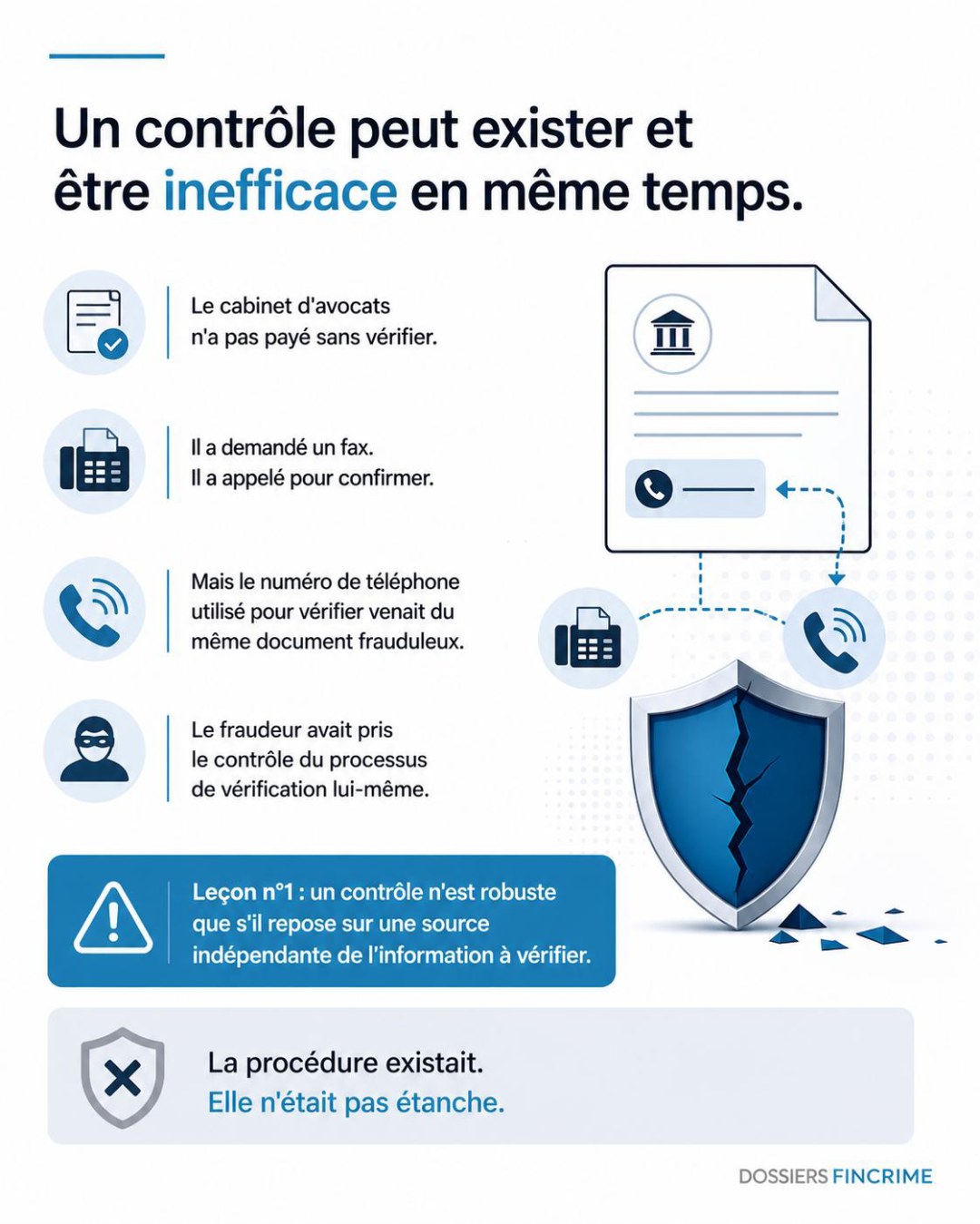
- A check that existed but was not leakproof In October 2019, a New York law firm is to pay $922,857 for a client. The instructions arrive by fax and the employee calls back to confirm... the number on the same fake fax. The fraudster controlled both the information and the means to verify it.
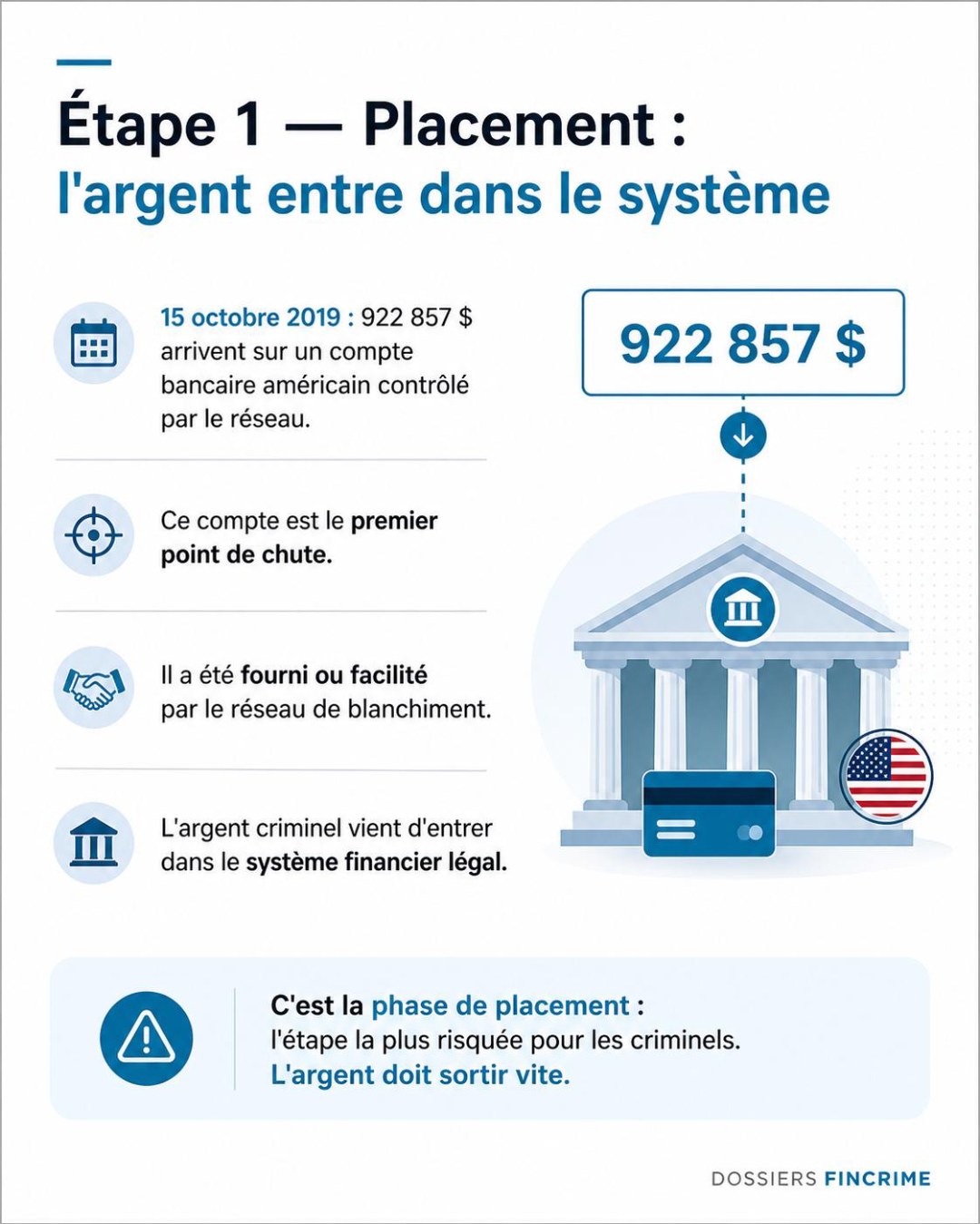
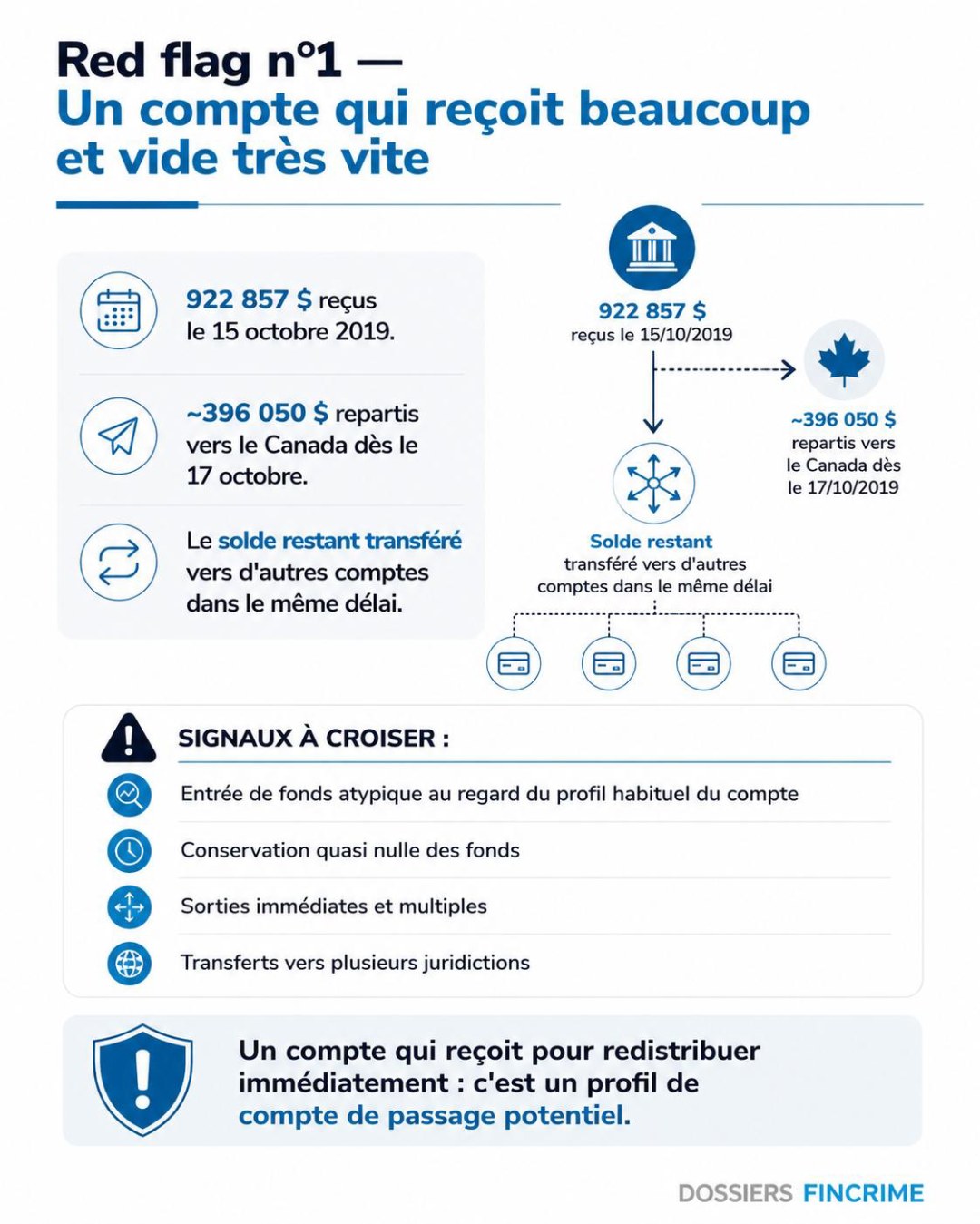
- Placement On October 15, 2019, $922,857 arrives in an American bank account controlled by the network. This is the first drop point, and the most risky step for criminals: money must come out quickly.
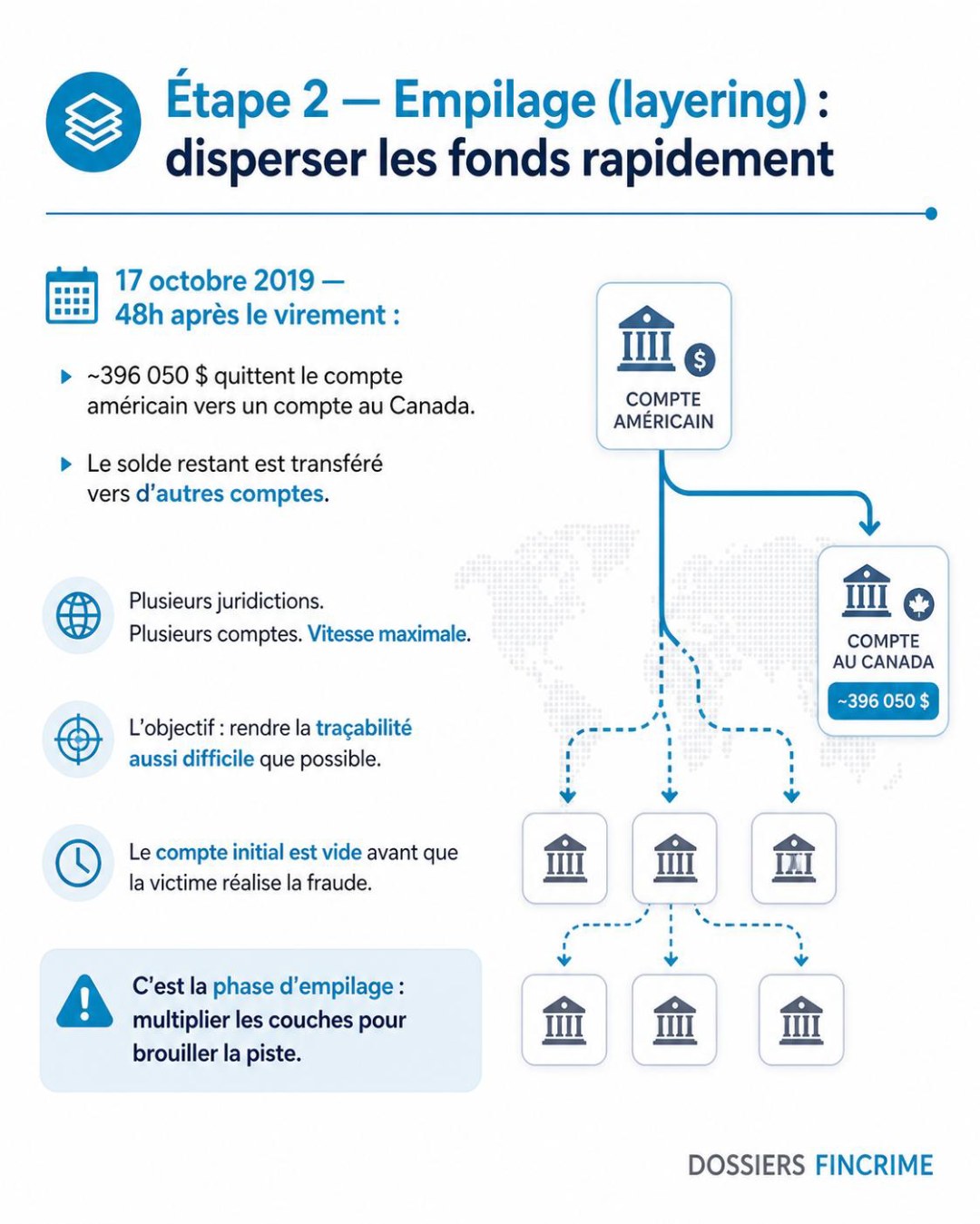
- Stackling On October 17, approximately $396,000 went to an account in Canada, the rest to other accounts. Several accounts, several jurisdictions, maximum speed: the initial account is empty before the victim realizes the fraud.
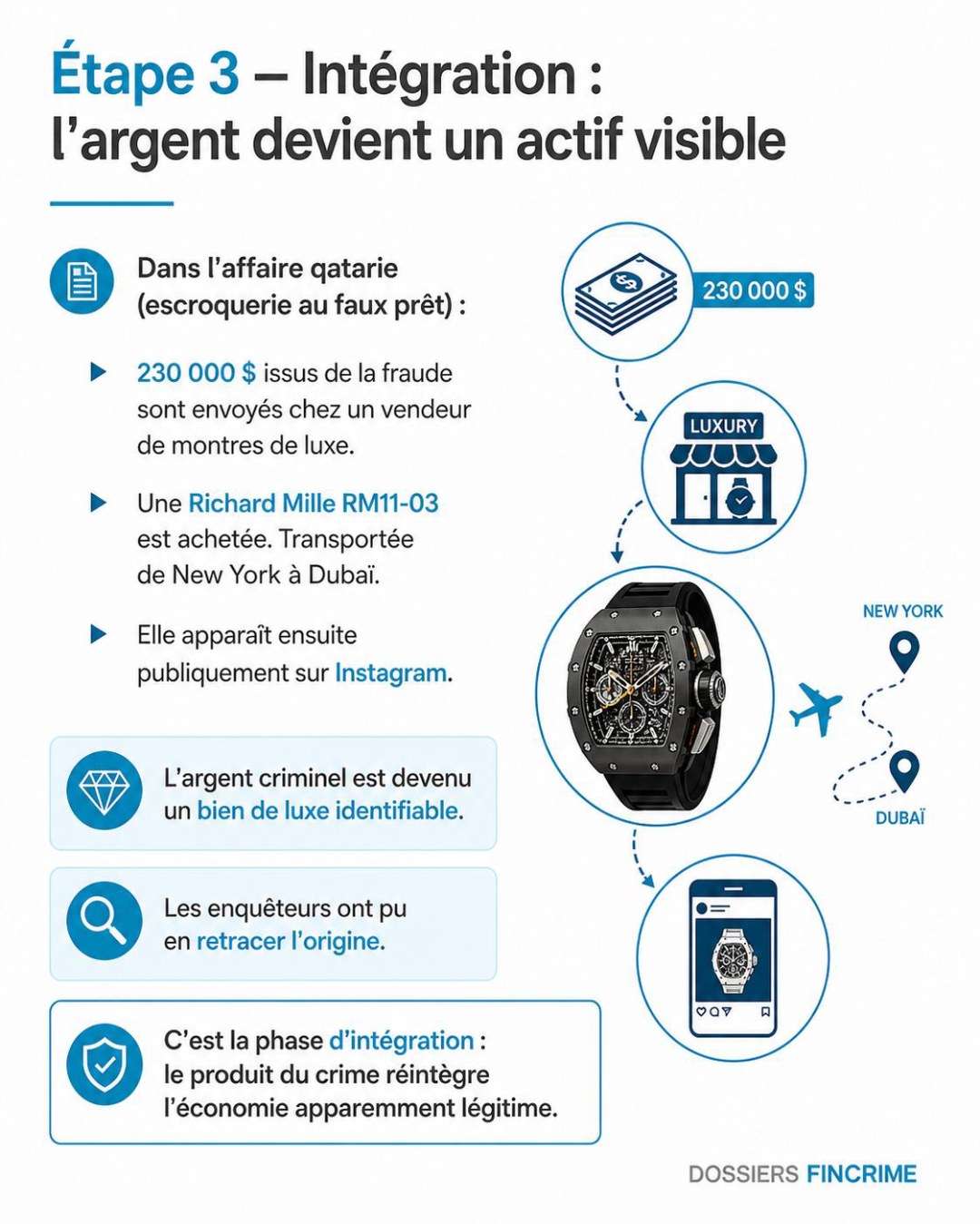
- Integration In another scam, a fake loan promised to a Qatari entrepreneur to finance a school, 230,000 dollars from the fraud were used to buy a Richard Mille watch, transported from New York to Dubai and then exhibited on Instagram. Criminal money has become an identifiable luxury property, allowing investigators to trace its origin.
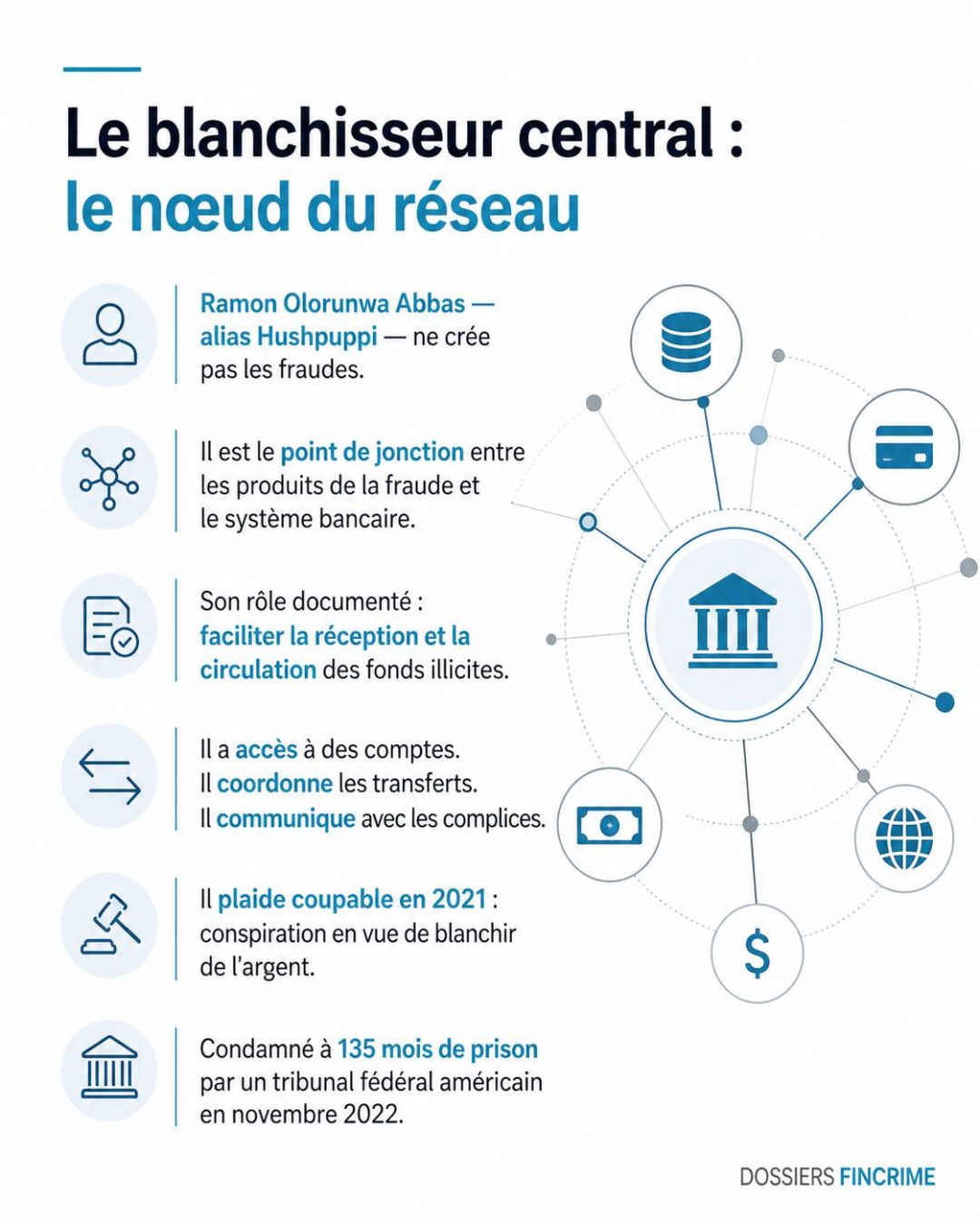
- Judgment Ramon Olorunwa Abbas, alias Hushpuppi, pleaded guilty in 2021 to conspiracy to launder money. In November 2022, an American federal court sentenced him to 135 months in prison, 11 years and 3 months.
- Lesson : a check is robust only if it is based on an independent source of the information to be checked. Changing the channel is not enough when the source remains the same.
Swipe through the visuals →
- An account that receives a lot and emptys very quickly : entry of atypical funds in relation to the usual profile of the account, almost zero retention of funds, immediate and multiple outflows, transfers to several jurisdictions. An account that receives to redistribute immediately is a potential pass account.
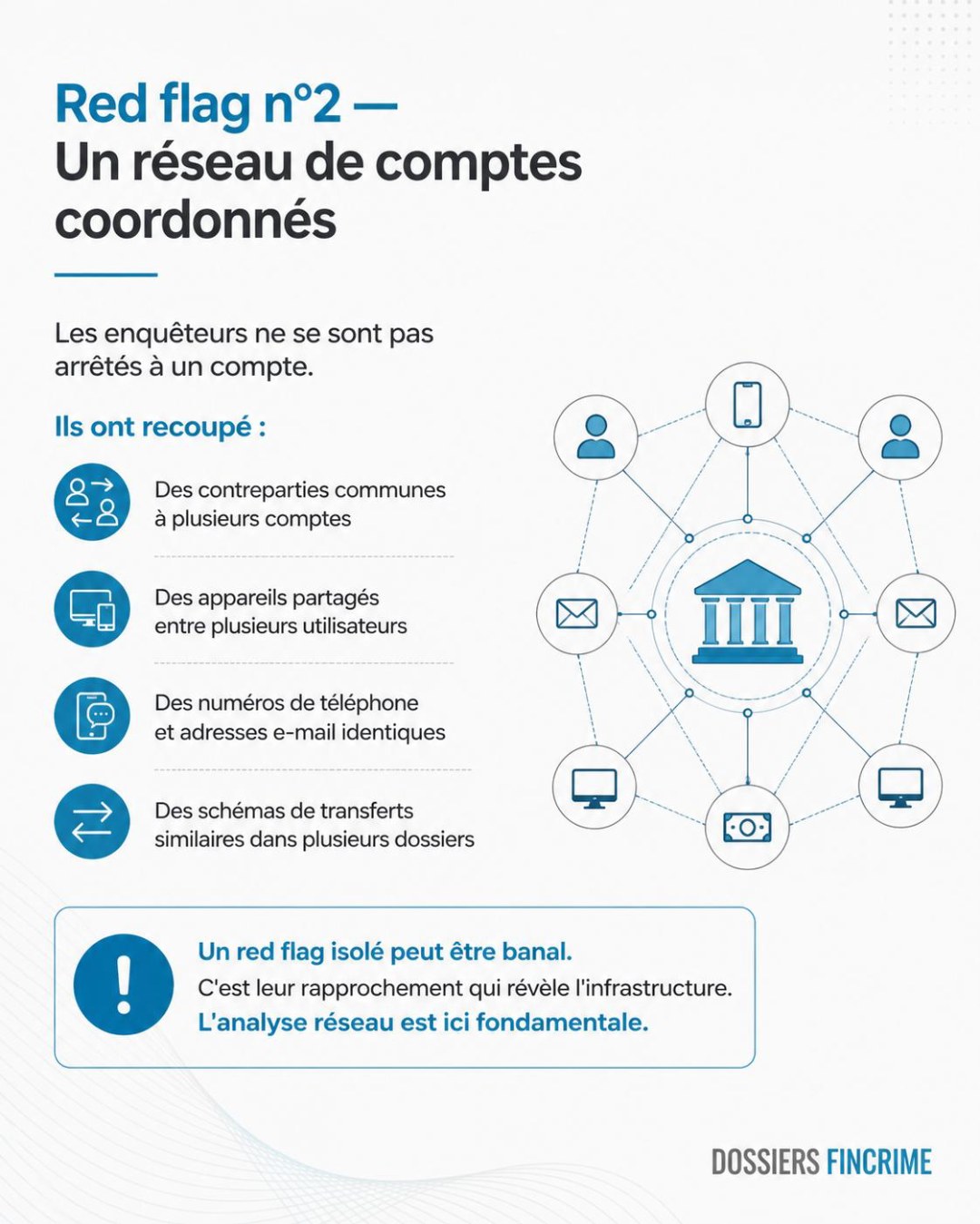
- A network of coordinated accounts The investigators did not stop at an account. They cross-checked common counterparties to multiple accounts, shared devices, identical phone numbers and e-mail addresses, similar transfer schemes from one file to another. An isolated signal can be commonplace; It is their rapprochement that reveals the infrastructure.
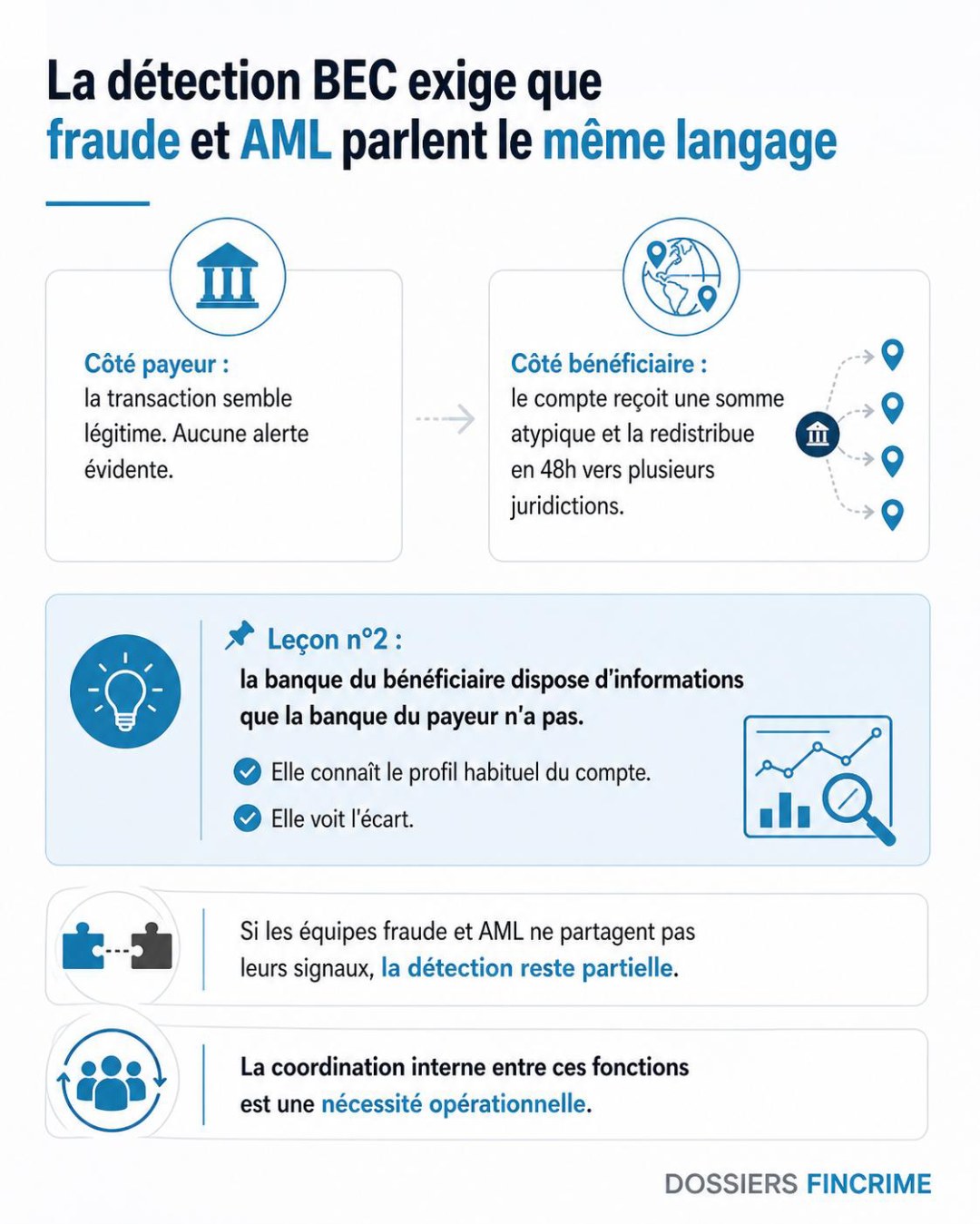
- On the payer side, nothing can be seen : the transaction seems legitimate and no alert is obvious. As for the beneficiary, the account receives an atypical sum and redistributes it in 48 hours to several jurisdictions. The bank of the beneficiary has information that the bank of the payer does not have: it knows the usual profile of the account and sees the discrepancy.
- Lesson The detection of fraudulent transfer orders (BEC) requires that the fraud teams and LCB-FT speak the same language. If they do not share their signals, the detection remains partial.
Swipe through the visuals →
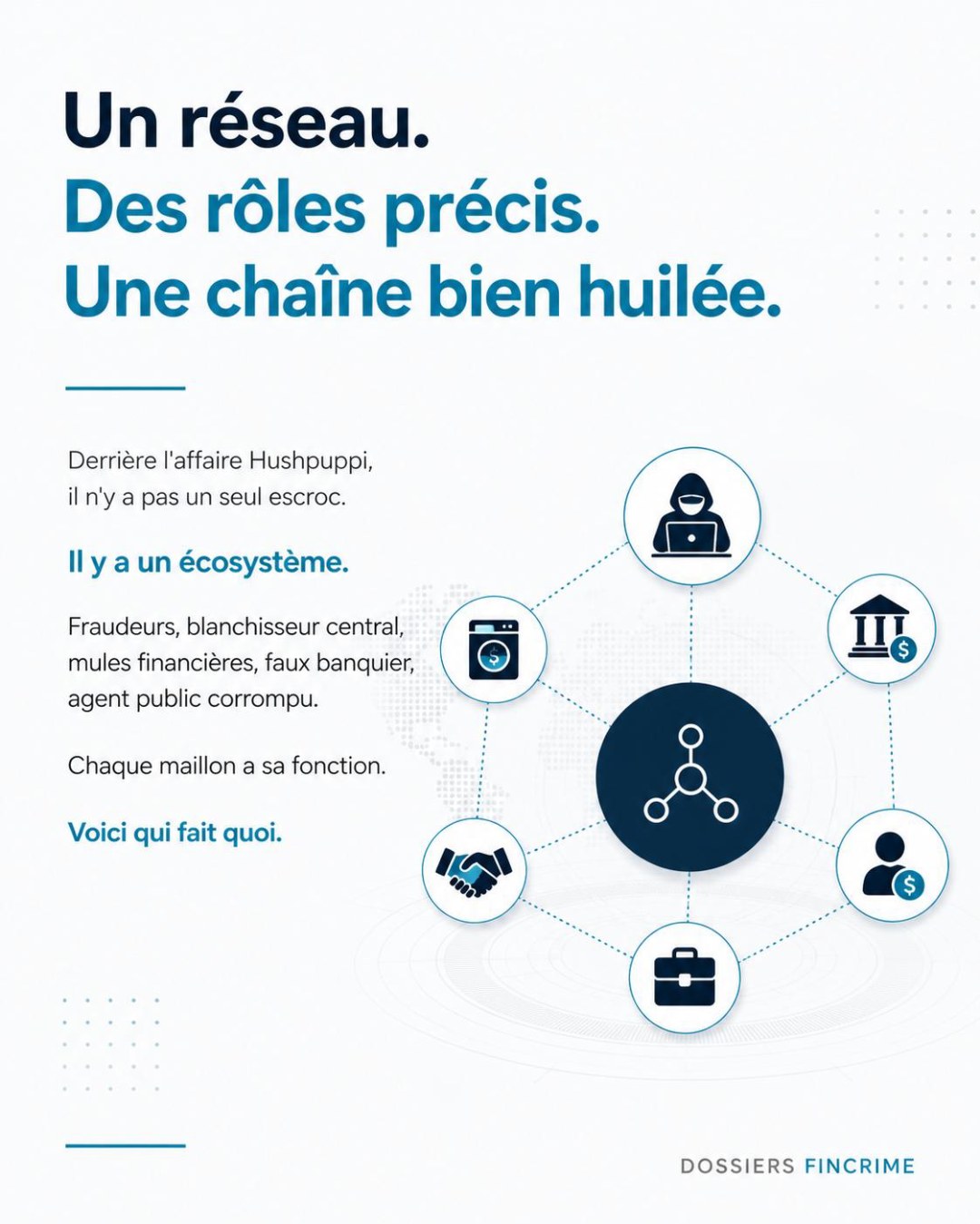
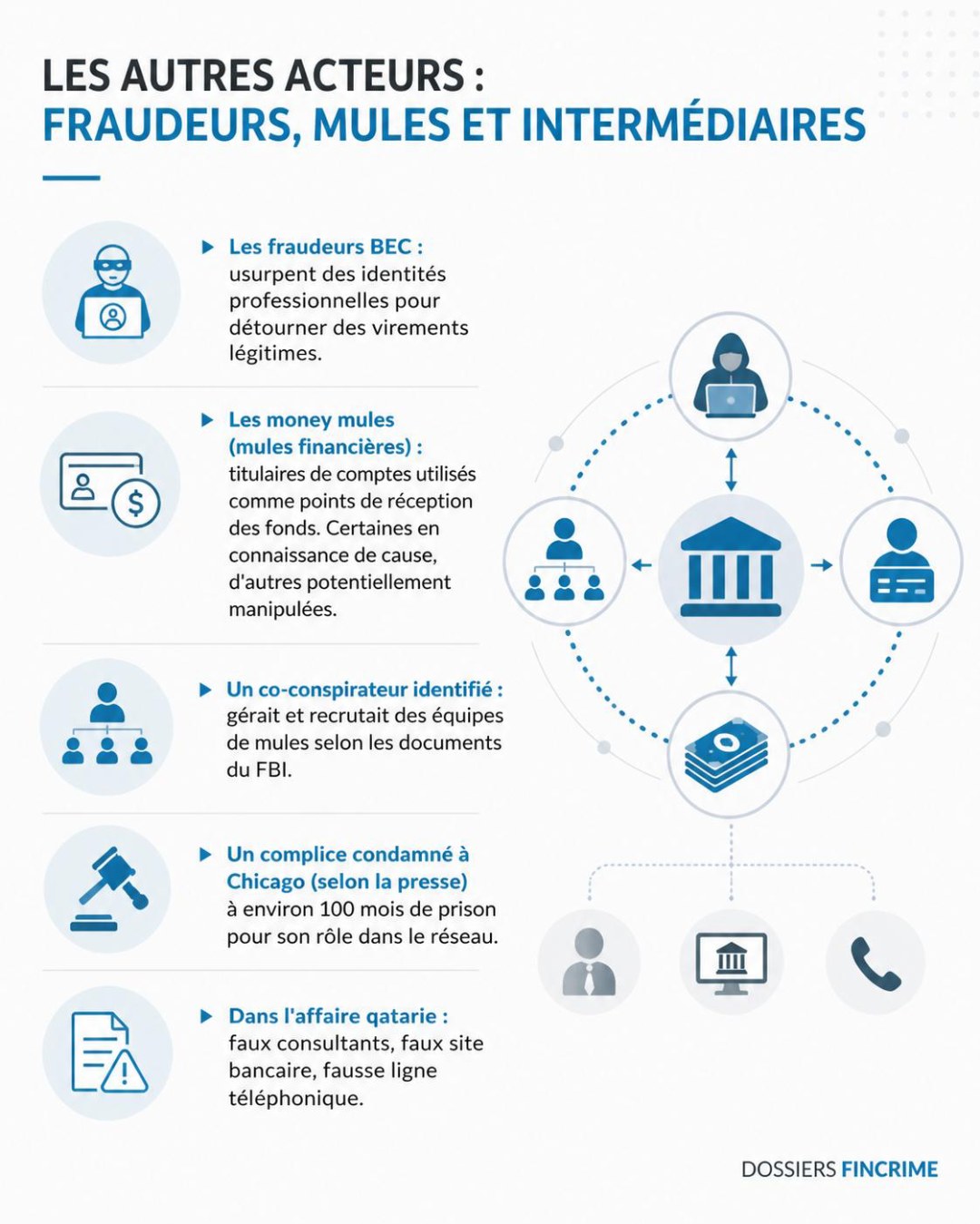
- An ecosystem, not an isolated crook : fraudsters, central launderer, financial mules, fake banker, corrupt public agent. Each link has its function.
- The central launderer : Hushpuppi ne crée pas les fraudes. Son rôle documenté est d’être le point de jonction entre les produits de la fraude et le système bancaire : il a accès à des comptes, coordonne les transferts et communique avec les complices.
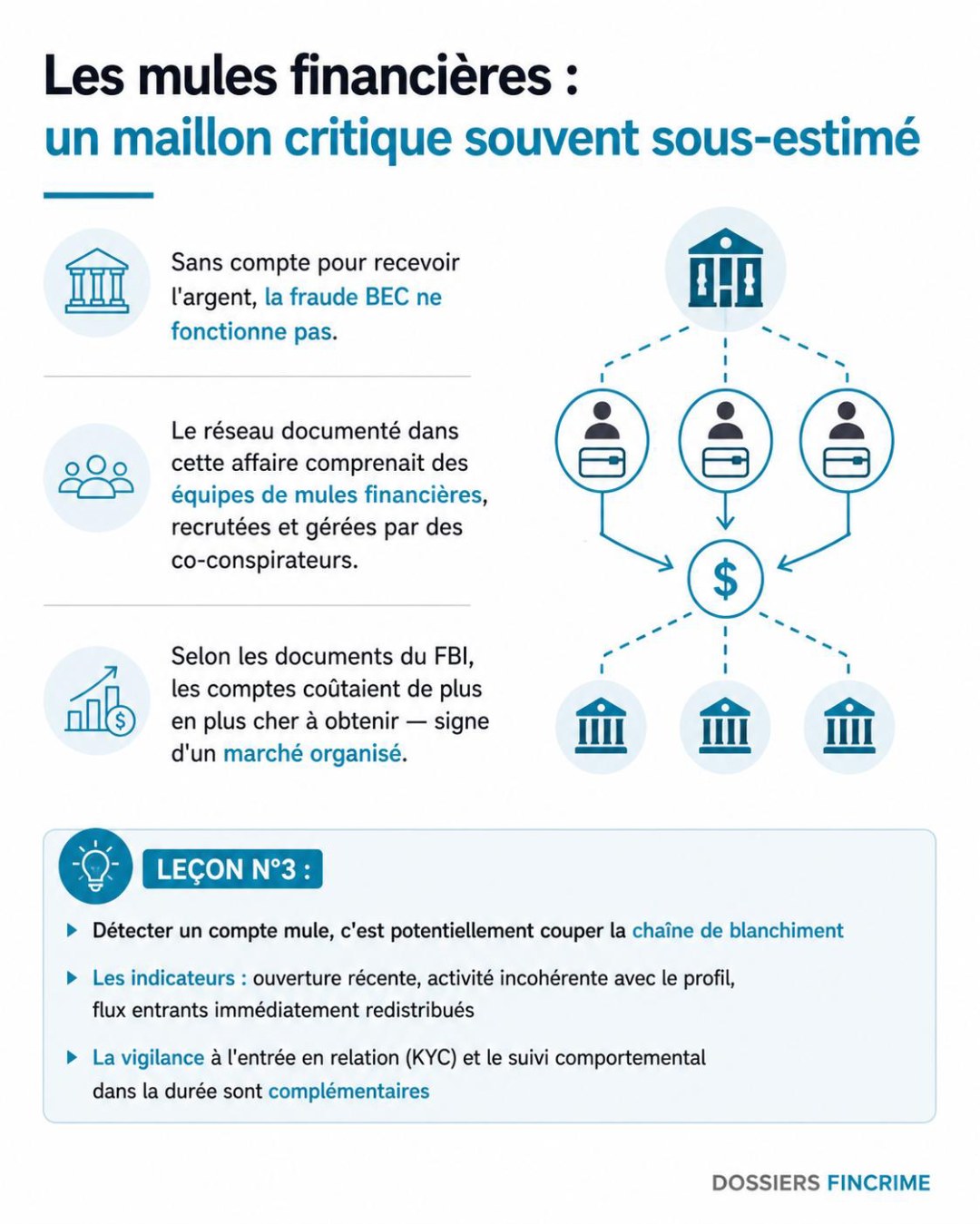
- Les mules financières : sans compte pour recevoir l’argent, la fraude BEC ne fonctionne pas. Le réseau s’appuyait sur des équipes de mules recrutées et gérées par des co-conspirateurs ; selon les documents du FBI, ces comptes coûtaient de plus en plus cher à obtenir, signe d’un véritable marché organisé.
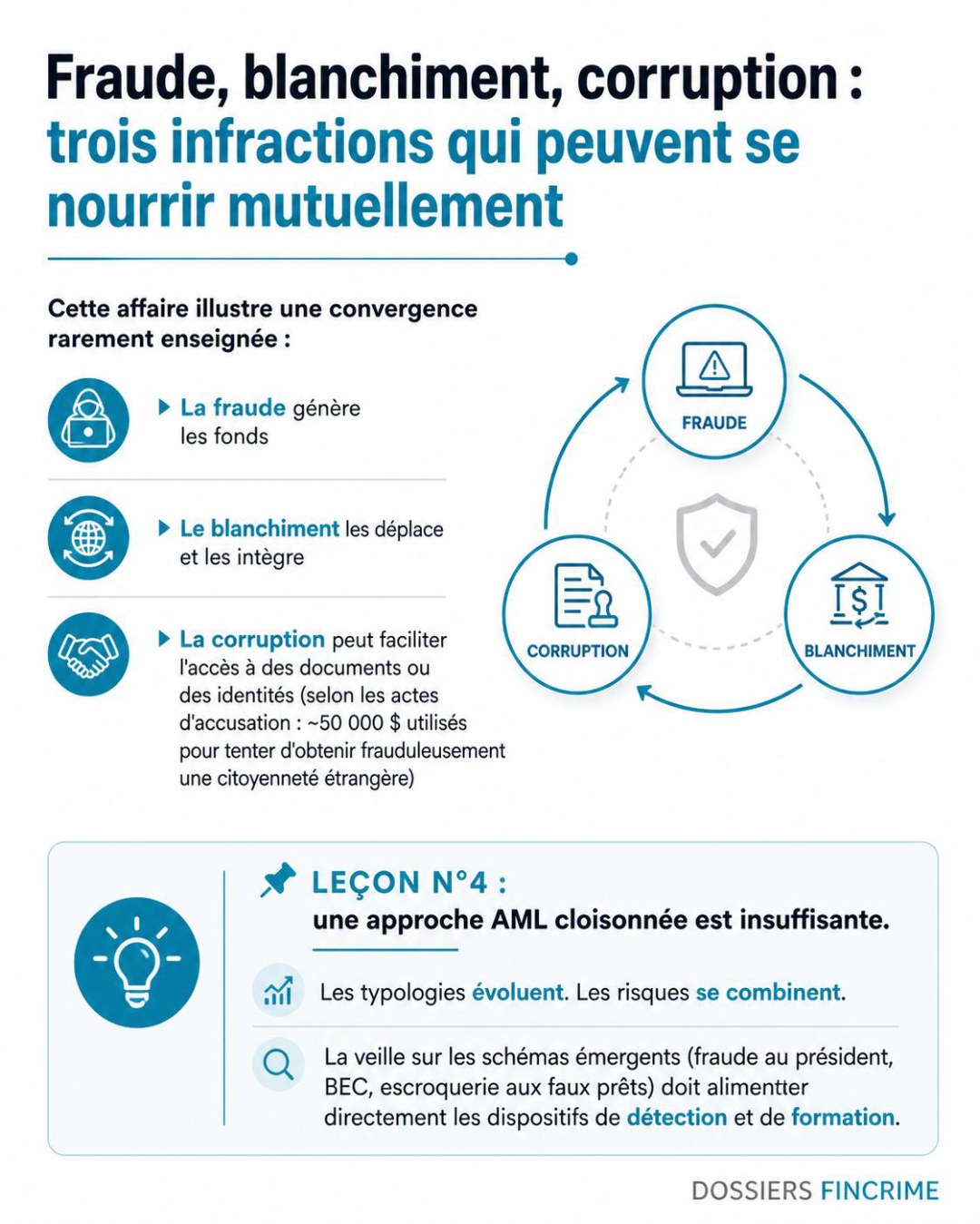
- Fraude, blanchiment, corruption : la fraude génère les fonds, le blanchiment les déplace et les intègre, la corruption peut faciliter l’accès à des documents ou à des identités. Selon les actes d’accusation, environ 50 000 dollars ont été utilisés pour tenter d’obtenir frauduleusement une citoyenneté étrangère.
- Leçons : détecter un compte mule, c’est potentiellement couper la chaîne de blanchiment (ouverture récente, activité incohérente avec le profil, flux entrants immédiatement redistribués), et la vigilance à l’entrée en relation et le suivi dans la durée sont complémentaires. Une approche cloisonnée est insuffisante : la veille sur les schémas émergents (fraude au président, BEC, escroqueries aux faux prêts) doit alimenter directement la détection et la formation.
Swipe through the visuals →
The hook (teaser from the episode) · see on YouTube
La montre à 230 000 $ · see on YouTube
Le faux fax · see on YouTube
48 heures pour 400 000 $ · see on YouTube
Le téléphone de Hush · see on YouTube
Nouvel IBAN : le bon réflexe · see on YouTube
3 réflexes pour les entreprises · see on YouTube
Is your AML/CFT framework ready for these schemes?
Each case decrypted in Dossiers FinCrime shows shortcomings in compliance devices. GCAP CONSEIL supports banks, fintechs and taxable establishments in their LCB-FT architecture, remediation and investigations.
Les affaires présentées sont des dossiers clôturés, dont l’issue judiciaire est connue. Les faits sont issus de décisions de justice, de documents du FBI et du Département de la Justice américain, et de sources publiques.