


Dossiers FinCrime · Episode 1 · 19 min
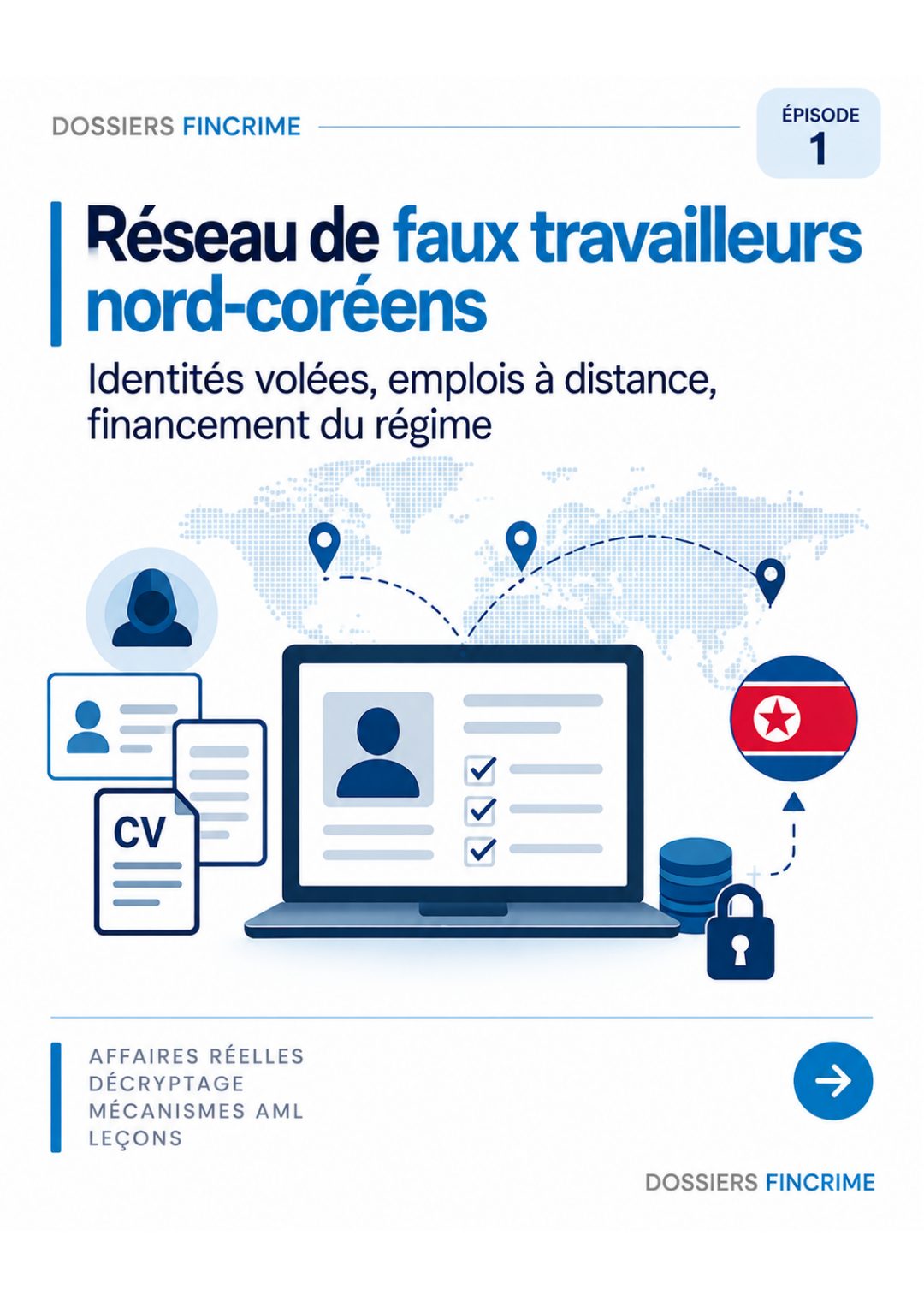
The Christina Chapman case: the laptop farm that funded North Korea
Fake IT workers, stolen identities and sanctions evasion
What if your new hire isn't who they claim to be? North Korean IT workers hired remotely under stolen American identities, a "laptop farm" set up in Arizona, and more than $17 million in salaries funnelled to the regime.
The full case file
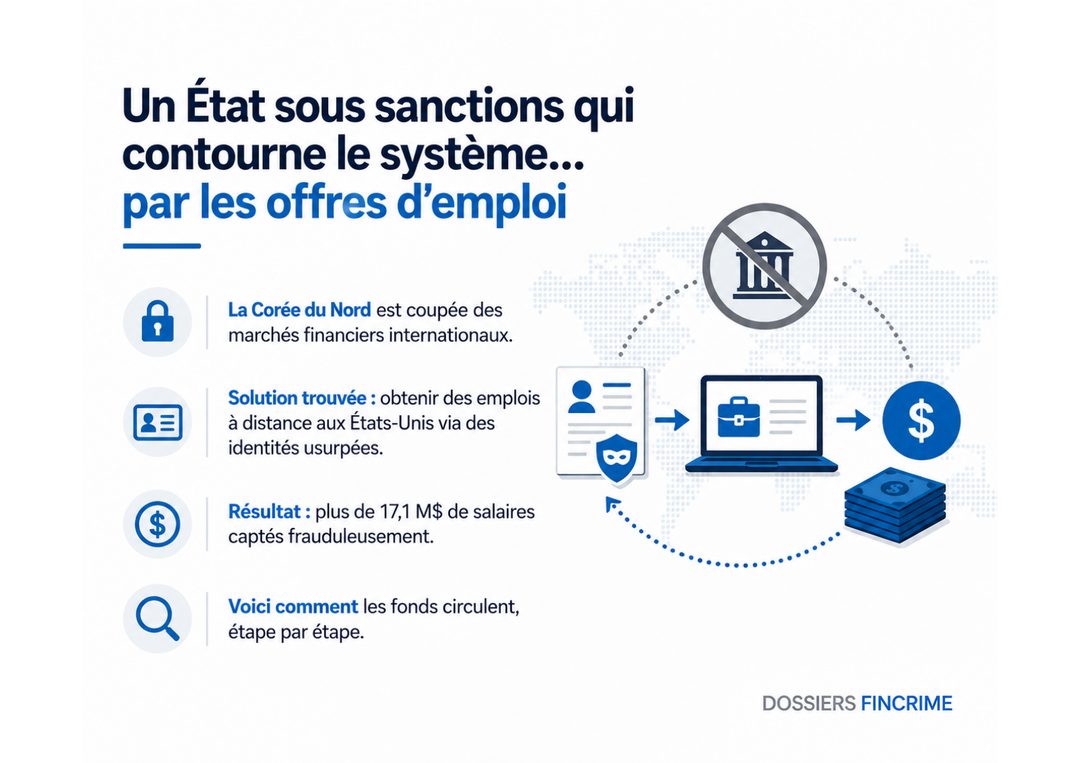
- A state cut off from financial markets : under international sanctions, North Korea looks for other sources of foreign currency.
- The workaround : landing remote jobs in the United States using stolen identities.
- The outcome : more than $17.1 million in salaries obtained fraudulently.
Swipe through the visuals →
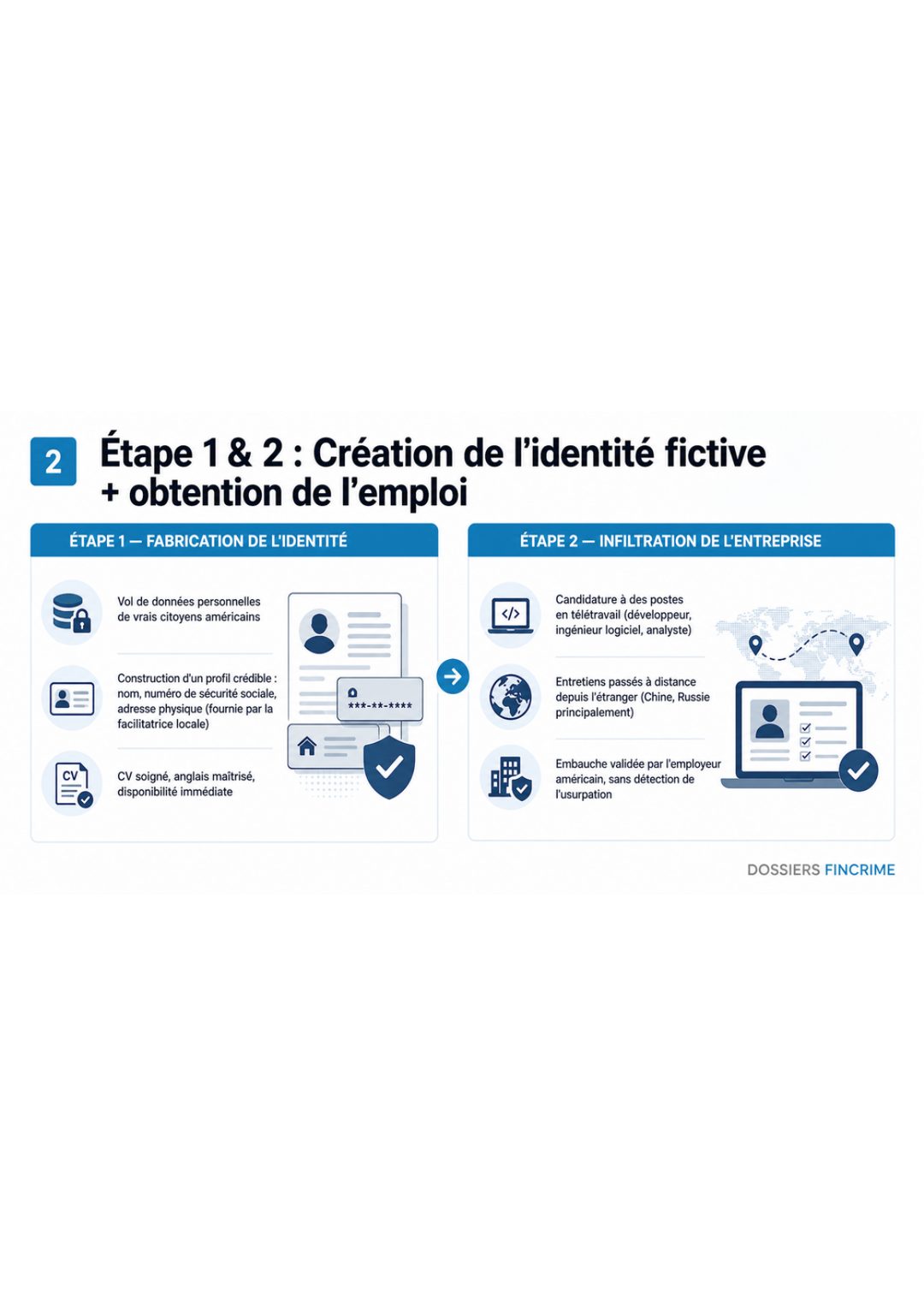
- Steps 1 and 2: fake identity and getting hired : profiles are built from real American identities, then used to get hired remotely by companies.
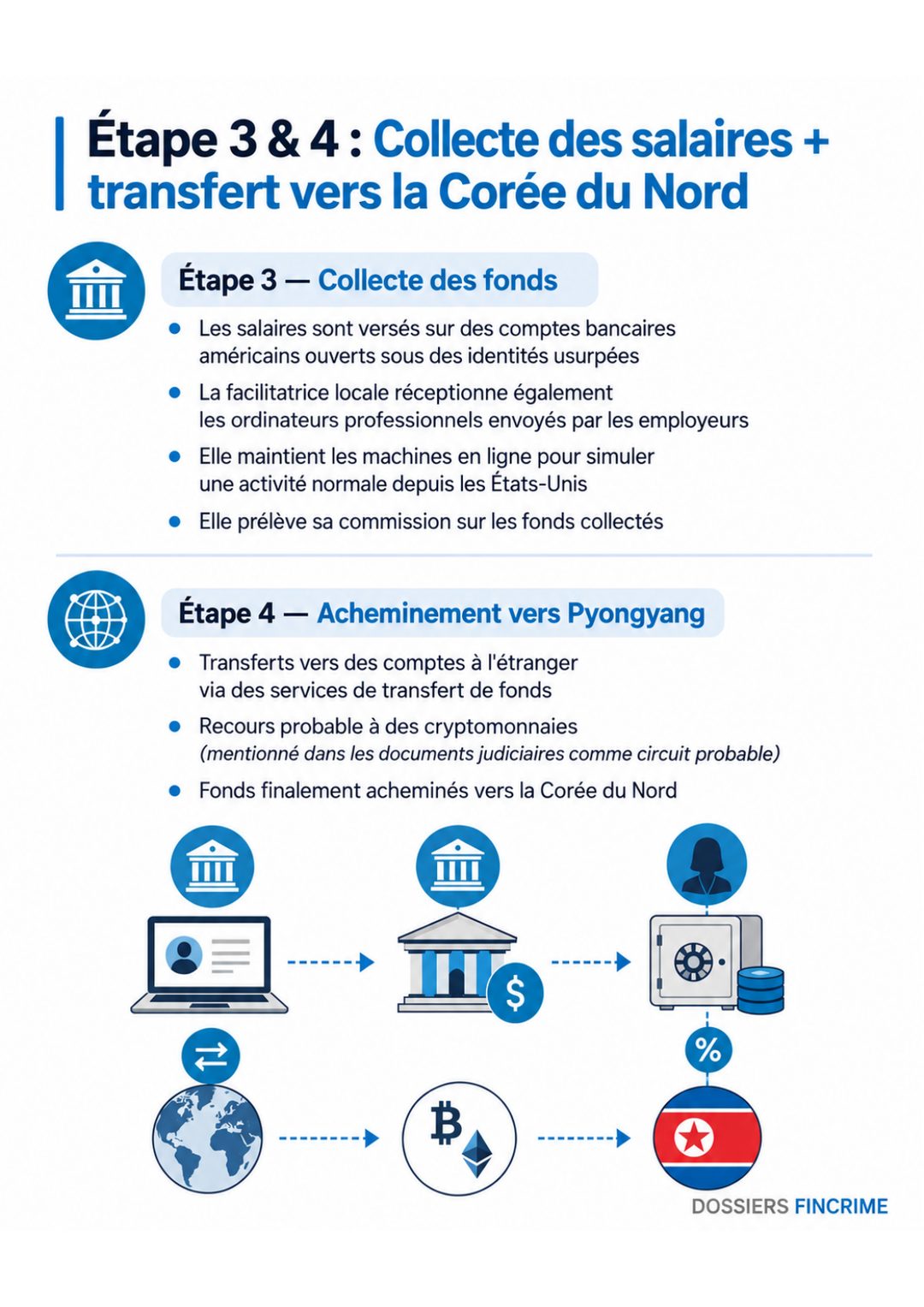
- Step 3: collecting the salaries : salaries are paid into accounts opened under the stolen identities; the laptop farm receives the computers shipped by employers and simulates activity from inside the United States.
- Step 4: moving the money to Pyongyang : transfers to accounts abroad, likely use of cryptocurrencies, and finally funds routed to North Korea.
Swipe through the visuals →
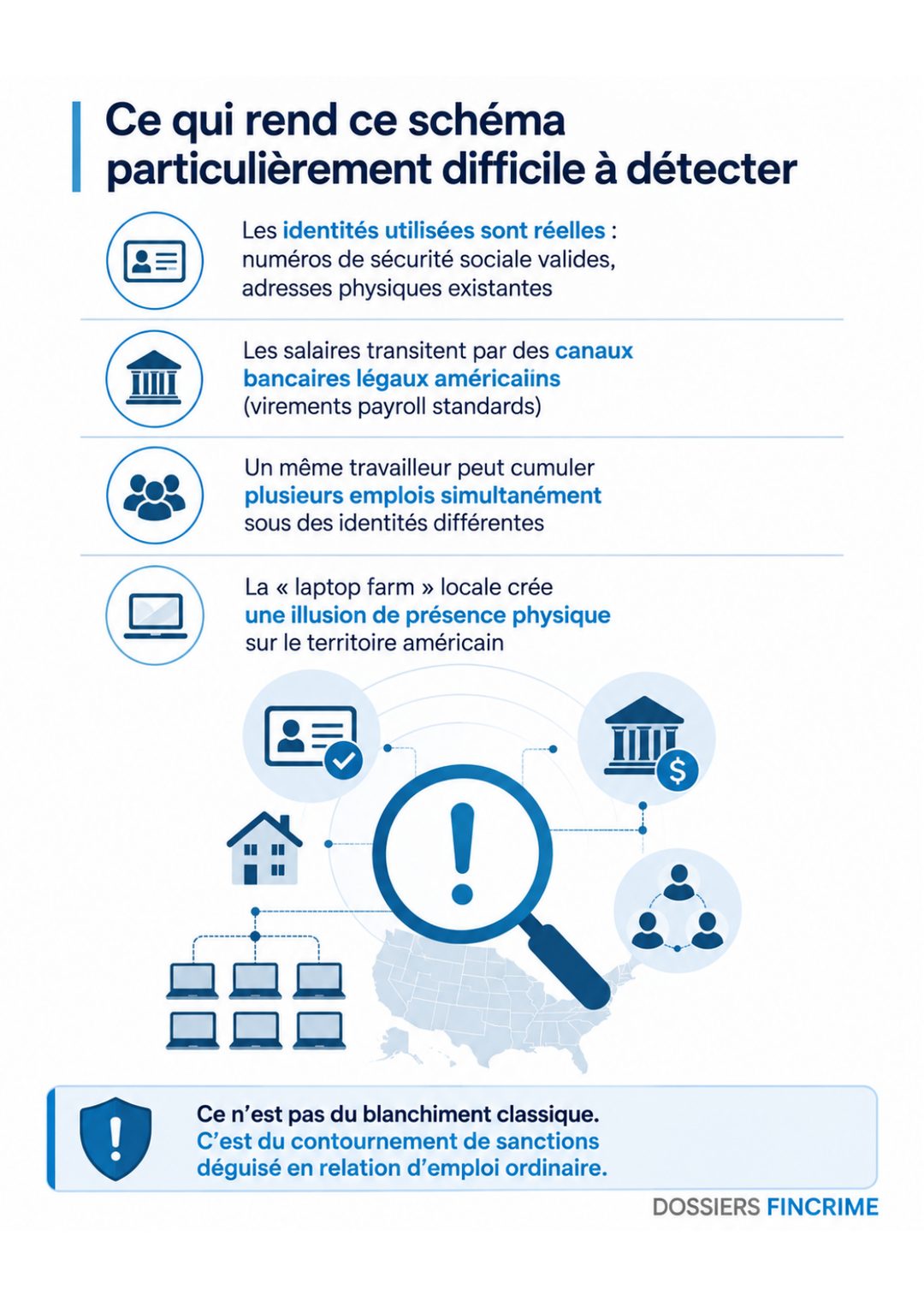
- Real identities: valid social security numbers and existing addresses.
- Salaries paid through legitimate US banking channels, by standard payroll transfers.
- A single worker can hold several jobs at once under different identities.
- The laptop farm creates the illusion of a physical presence on US soil.
This is not classic money laundering : it is sanctions evasion disguised as an ordinary employment relationship.
Swipe through the visuals →
Is your AML/CFT framework ready for these schemes?
Every case unpacked in Dossiers FinCrime reveals weaknesses that also exist in compliance frameworks. GCAP CONSEIL supports banks, fintechs and regulated firms with their AML/CFT framework design, remediation and investigations.
The cases covered are closed, with a known judicial outcome. The facts are drawn from court decisions and public sources.